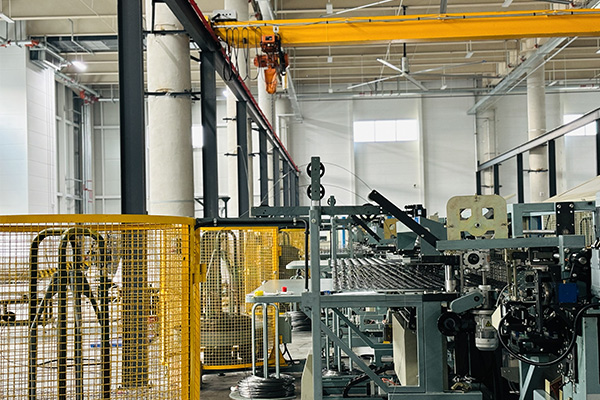
Mattress spring machines have emerged as the unsung heroes of the bedding industry, powering the production of one of the most essential household items. With over 70% of mattresses worldwide incorporating spring cores, these machines have transcended their role as mere manufacturing tools to become drivers of innovation, sustainability, and market accessibility. From small-scale workshops to large-scale industrial facilities, their versatility and technological progress have reshaped how mattresses are designed, produced, and consumed globally.
Beyond the well-known pocket and Bonnell spring variants, modern mattress spring machines now encompass linked spring machines and mini-pocket spring systems. Linked spring machines, favored for mid-range mattresses, create interconnected coil networks that balance support and durability, with models like Juki’s MS-700 series offering adjustable coil heights (from 5cm to 20cm) to suit diverse mattress thicknesses. Mini-pocket spring machines, a rising star in premium bedding, produce ultra-thin coils (as small as 3cm in diameter) that enable layered comfort structures, catering to the growing demand for pressure-relief mattresses. These specialized machines operate at speeds of 120-150 springs per minute, combining precision with flexibility for niche market needs.
Sustainability has become a key focus in machine design, with manufacturers integrating eco-friendly features to align with global green initiatives. Modern machines utilize energy-efficient servo motors that reduce power consumption by 30% compared to traditional models, while recycled steel compatibility and water-based lubrication systems minimize environmental impact. Waste reduction is further enhanced by automatic material feeding systems that optimize coil wire usage, cutting scrap rates to less than 2%. Additionally, modular machine designs allow for easy maintenance and part replacement, extending equipment lifespan by up to 15 years and reducing electronic waste.
On a global scale, these machines adapt to regional market preferences: in Europe, where luxury bedding dominates, pocket spring machines with zoned support technology are prevalent; in Asia-Pacific, cost-effective Bonnell spring machines cater to mass-market demand, with manufacturers like Yizumi expanding production capacity to meet the region’s 6% annual growth rate. For emerging markets in Africa and Latin America, compact, easy-to-operate machines are gaining traction, enabling local manufacturers to compete with international brands.
In essence, mattress spring machines are more than production equipment—they are enablers of market growth, sustainability, and consumer-centric design. As the industry continues to prioritize comfort, durability, and environmental responsibility, these machines will evolve further, integrating IoT connectivity for remote monitoring and predictive maintenance, ensuring they remain at the forefront of bedding manufacturing innovation.