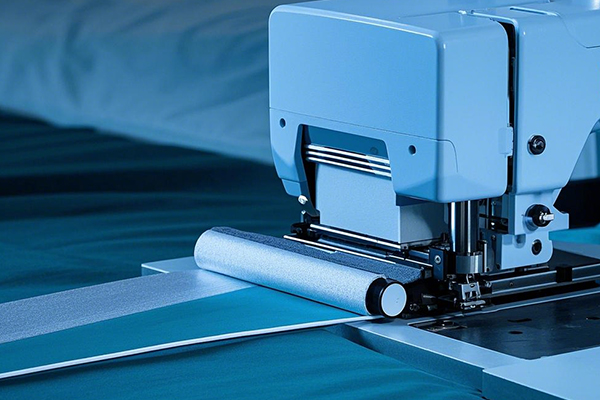
As the demand for high-quality, customized mattresses surges, pocket spring assembly machines have become indispensable in the furniture manufacturing industry. These specialized devices transform individual pocketed springs into uniform, durable mattress cores, revolutionizing production efficiency while elevating product performance ³. Unlike manual assembly, which suffers from inconsistency and low throughput, modern assembly machines ensure precision, speed, and scalability for both mass production and custom orders.
At their core, these machines streamline the process of bonding spring rows into stable mattress cores through two primary technologies: servo-controlled gluing and ultrasonic welding ⁵. The gluing systems offer flexible application modes (continuous or intermittent spraying), reducing adhesive waste by up to 40% while ensuring strong, uniform bonds ⁵. For eco-conscious manufacturers, ultrasonic welding provides a glue-free alternative, eliminating formaldehyde and other toxic residues to meet global environmental standards ⁶. Equipped with intelligent PLC controls and touchscreen interfaces, operators can quickly adjust parameters like spring count, mattress size, and bonding patterns to accommodate diverse product lines ⁵.
Key advancements in recent years have enhanced versatility and efficiency. Dual-line models can integrate with 1-3 pocket spring coiling machines, boosting throughput to 27-30 rows per minute ³. Precision components like laser sensors and servo motors control wire diameter accuracy to ±0.01mm, minimizing material waste and ensuring consistent support across the mattress ². Additionally, modular designs allow seamless integration with downstream equipment—such as foam layer assemblers and roll-packing machines—creating fully automated production lines ³.
Sustainability and cost-effectiveness drive further innovation. Modern machines reduce energy consumption by 35-50% compared to older models, cutting carbon footprints while lowering operational costs ¹. Material efficiency features, including automatic fabric trimming and optimized bonding, reduce scrap rates by 20-30% ¹. For manufacturers, these benefits translate to faster time-to-market, reduced labor costs, and compliance with green manufacturing policies ⁶.
In summary, pocket spring assembly machines blend precision engineering, automation, and sustainability to meet the demands of today’s mattress industry. As consumer expectations for comfort and eco-friendliness grow, these machines will remain pivotal in delivering high-performance, customizable sleep solutions.